Line6 Helix Stadium XL Review
4 min read
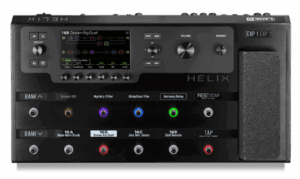
The Line 6 Helix Stadium XL Floor is a flagship multi-effects processor and amp modeler that sets a new standard for guitarists seeking cutting-edge tone shaping and live performance capabilities. Launched in June 2025 to celebrate the 10th anniversary of the original Helix, it introduces a host of advanced features, including the new Agoura modeling engine, an 8-inch touchscreen, and extensive connectivity. Below is a detailed review based on available information, critical analysis, and user feedback from early discussions.
- Sound Quality and Agoura Modeling Engine:
- The Helix Stadium XL features the new Agoura modeling engine, which delivers highly realistic amp and effects modeling with improved dynamics and responsiveness compared to the previous HX technology.
- It includes 16 guitar and 8 bass amp models, with detailed component modeling that captures nuances like circuit feedback, sag, bias, and dynamic speaker impedance curves. Users praise its “feel factor” and studio-quality sound.
- The “Hype” control is a standout, allowing seamless morphing between authentic and polished, mix-ready tones with a single knob, making it versatile for both vintage and modern sounds.
- The Proxy cloning engine enables users to capture their own amps, pedals, and cabs with near-perfect fidelity, positioning it as a strong competitor to devices like the Neural DSP Quad Cortex. However, some users note that details on the cloning process (e.g., cloud-based processing) remain unclear, raising questions about accessibility and latency.
- User Interface and Design:
- The 8-inch high-resolution touchscreen is a game-changer, offering intuitive swipe, drag, and pinch gestures for fast preset editing and signal chain management. This addresses a key criticism of earlier Helix models lacking touchscreens, putting it on par with rivals like the Quad Cortex and Fender Tone Master Pro.
- The XL model includes 12 high-contrast OLED scribble strips, providing clear visibility of patch assignments, which users find invaluable for live settings. However, some wish for a model with scribble strips but without the built-in expression pedal for a more compact option.
- The unit measures 19.4″ x 10.1″ and weighs 11.5 lbs, making it slightly smaller and lighter than its predecessors but still bulkier than compact modelers. Its dual-piece extruded aluminum chassis with a folded steel baseplate ensures durability, though some gigging musicians worry about the touchscreen’s reliability in rugged environments.
- Connectivity and Integration:
- The XL offers extensive I/O, including two variable impedance instrument inputs (126+ dB dynamic range), an XLR mic preamp (128 dB dynamic range), four effects loops, four external expression pedal inputs, four amp control outputs, and four drum trigger inputs. This makes it a central hub for complex stage setups.
- It supports Variax guitars and Powercab systems via the Expand D10 digital I/O unit (sold separately for $219.99), which handles VDI and L6 LINK connections. Some users criticize the external module approach, preferring these connections to be integrated.
- Wi-Fi and Bluetooth connectivity, along with a forthcoming app for wireless control, enhance its modern appeal. It also functions as an 8-channel audio interface with a 32GB MicroSD card for recording stems, ideal for studio use.
- Live Performance Features:
- The Showcase automation engine is a major highlight, allowing automation of presets, MIDI changes, lighting, and up to eight backing tracks with stem separation. This positions the XL as a performance workstation for bands, though its complexity may be overkill for casual players.
- The built-in expression pedal with a toe switch is precise and integrates seamlessly, but some users argue it’s a potential point of failure compared to external pedals, which are easier to replace.
- Features like Preset Audition (audio samples per preset), Focus View for intuitive parameter morphing, and a redesigned Command Center enhance live usability, but the learning curve may be steep for new users.
- Compatibility and Updates:
- Full backward compatibility with Helix/HX presets ensures a smooth transition for existing users, preserving their investment in the ecosystem.
- Line 6 promises continuous wireless updates, reducing reliance on manual firmware updates and keeping the unit future-proof. However, some users speculate that the most advanced features (e.g., Agoura amps) may remain exclusive to the Stadium series due to DSP limitations in older models.
- Price and Value:
- Priced at $2,199.99, the XL is a premium investment, competing with high-end units like the Fractal Audio Axe-Fx III and Neural DSP Quad Cortex. Some users find the price reasonable given the integrated controllers and feature set, while others feel it’s steep compared to the original Helix Floor (now $1,299) or compact alternatives.
- Pre-orders began June 25, 2025, with availability expected in Fall 2025. The high cost may limit its market to professional players, with some suggesting Line 6 could release budget-friendly spin-offs (e.g., a Stadium Stomp) later.
- Pros:
- Exceptional sound quality with the Agoura engine and Proxy cloning.
- Intuitive touchscreen and scribble strips streamline live and studio workflows.
- Robust connectivity and automation make it a versatile performance hub.
- Backward compatibility and wireless updates enhance longevity.
- Cons:
- High price point may deter hobbyists or those with recent Helix purchases.
- Built-in expression pedal raises durability concerns for gigging musicians.
- External Expand D10 unit for Variax/L6 LINK adds cost and complexity.
- Lack of clarity on some features (e.g., Proxy cloning process) and potential feature exclusivity for older models.
Verdict: The Helix Stadium XL Floor is a powerhouse for professional guitarists and live performers, offering unparalleled sound quality, connectivity, and automation capabilities. Its Agoura engine and touchscreen interface mark a significant leap forward, rivaling top competitors. However, its premium price and some design choices (like the external I/O module) may not suit everyone. For those needing a comprehensive, future-proof rig, the XL is a top contender, but budget-conscious players may prefer waiting for smaller, more affordable variants.
About The Author